From Seabed to Carbon Credits
Three generations ago, the land BioRomeo farms today was still seabed. Now Krispijn van den Dries captures carbon on it, and reinvests the proceeds into the system that makes that possible.
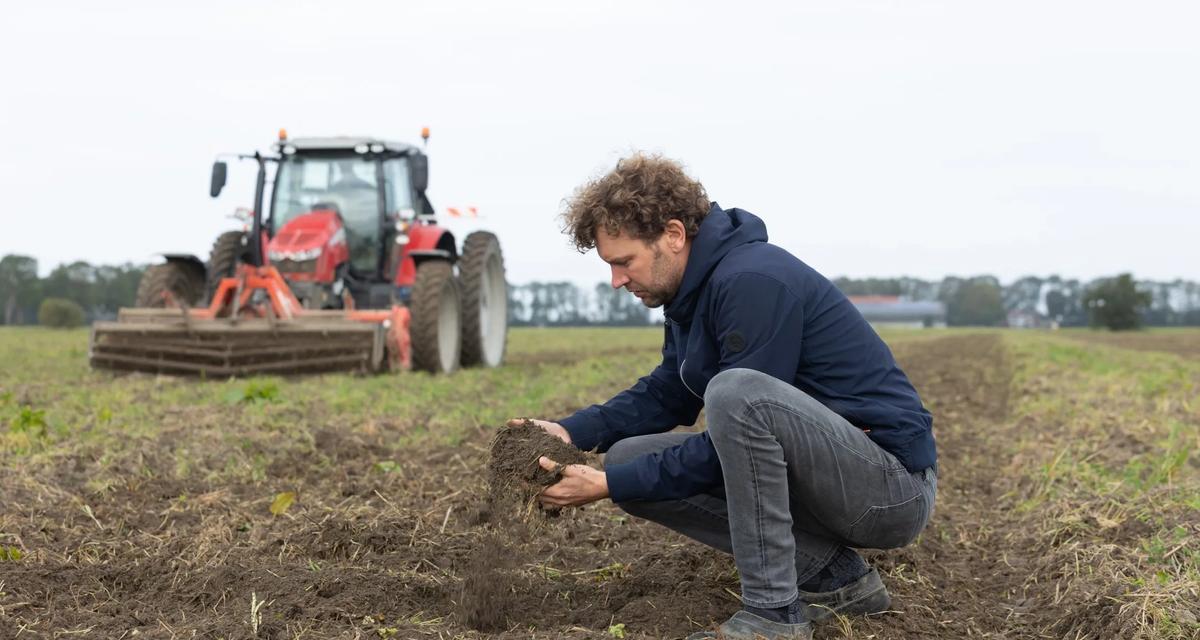
Three generations ago, the land BioRomeo farms today was still seabed. Now Krispijn van den Dries captures carbon on it, and reinvests the proceeds into the system that makes that possible.
For years, the land near Ens went into winter black after the cabbage harvest: bare, empty ground, like everywhere else in the Noordoostpolder. Until Krispijn van den Dries started undersowing herbs among his cabbages. "Normally that land went into winter empty. Now it goes in green. That makes the soil so much better."
It's a small example from a long line of experiments at BioRomeo, the biodynamic arable farm Van den Dries runs with his father Digni and business partner Peter Keij. And it's exactly the kind of work he was recently rewarded for: this past May, BioRomeo sold a total of 466 carbon credits through Oncra (after already selling a number of them earlier this year and last year). With part of the proceeds, the company paid off the remaining Oncra fee at a discount, allowing Oncra to grow in turn: €11,500 for the further development of Oncra 2.0.
Pioneering runs in the family
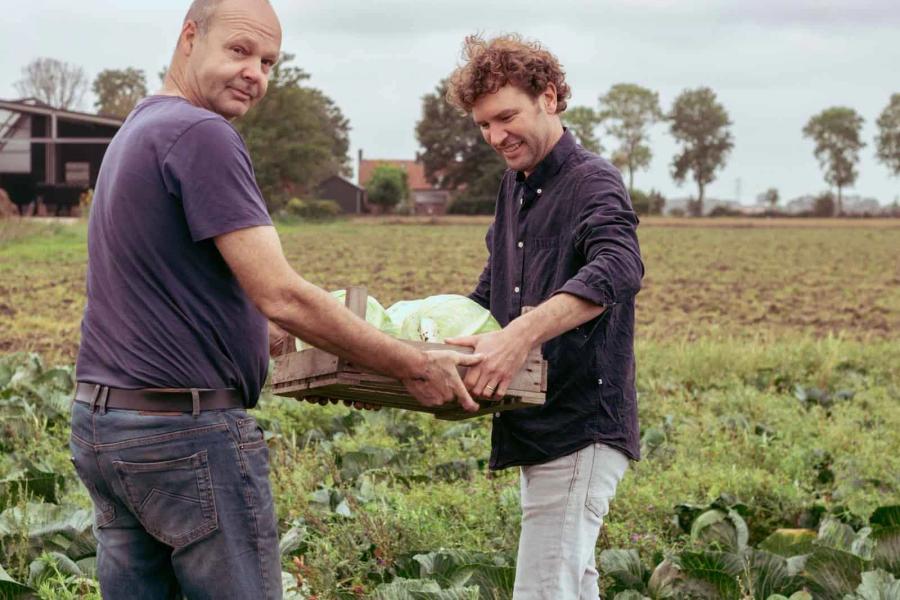
BioRomeo's story begins on fresh seabed. Krispijn's grandparents came from Zeeland to the newly reclaimed Noordoostpolder after the Second World War. His father Digni converted the farm to organic in 1990; partly under the influence of Krispijn's mother, who was already into vegetarian eating and sustainable living at the time.
"It was a good decision, but a difficult one too," says Krispijn. "There were very few organic farms back then. The machinery you needed didn't exist. New techniques had to be invented from scratch. It was pioneering."
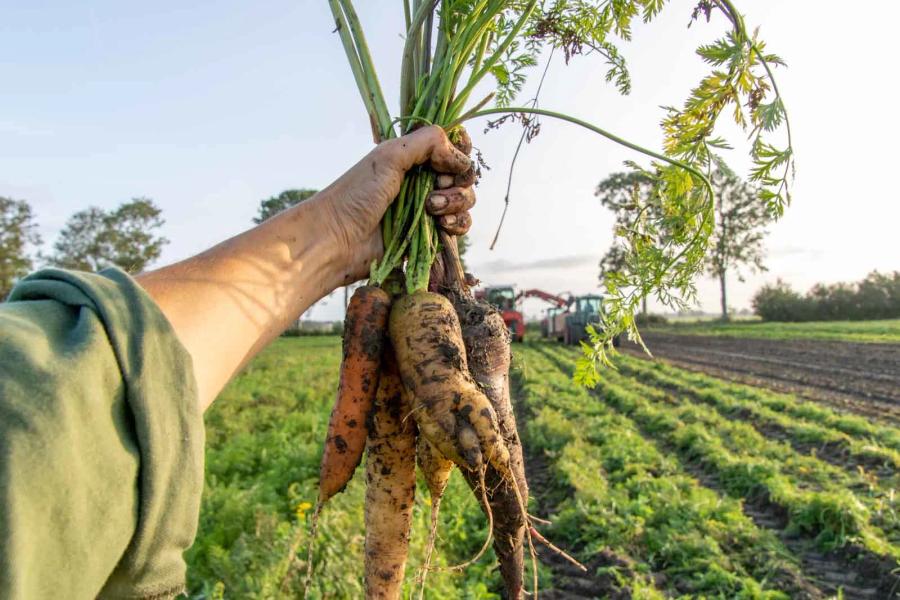
Since 2006 the farm has been biodynamic, Demeter-certified. Krispijn himself joined in 2012, after a roundabout path that took him through an internship in Mexico, a graduation project in Morocco, and agricultural advisory work in several African countries. On more than 70 hectares, they now grow over twelve types of vegetables: from rainbow carrots to Chinese cabbage, and from wild beets to seed potatoes.
No chemicals, just compost tea
Biodynamic is a certification with requirements; regenerative is not. Van den Dries does both, and the hardest version of it: without chemicals. He taught himself to work with compost tea, ferments, and bokashi, and together with Regeneratieve Alliantie he organizes two annual course days on regenerative farming for fellow farmers, held on the farm.
"As a farmer you're in a continuous learning process. Every year, every season is different." And pioneers sometimes lose money. "If you're a pioneer, things go wrong sometimes too. You have to be willing to pay for that."
That's where the carbon credits come in. Not a business model, he stresses, but recognition. "It's a kind of appreciation for the work you do. It doesn't give you continuity, but you can use it to run an experiment, or buy a machine for regenerative farming."
The carbon capture itself isn't a matter of feeling: BioRomeo measures it every year. "We see it very clearly. Getting better every year, that's what we do." Above the land, too, the difference is visible: more birds and insects than in the surrounding area.
Investing in the system
The 466 credits were bought by, among others, the Coppa Group, with trading platform Scature arranging the sale. When a sizeable sum came in all at once as a result, BioRomeo decided to buy out the Oncra fee for future credits in one go, directly investing in Oncra's growth.
Why? "Hopefully Oncra can help this system grow bigger, so more farmers can take part in it. So that sustainable carbon capture becomes the norm."
He firmly recommends carbon credits to other farmers who capture carbon. "You have to sit down and put in some effort, but with help — especially through Oncra — it's very doable." And for anyone wondering whether the system really matters: "This seems like a better investment to me than planting a few trees somewhere in another country. Here, you're doing something local."
His message to policymakers is just as level-headed as it is ambitious: "This should really be written into regulation. So that everyone works sustainably, and whoever can't, pays for it."
BioRomeo sells carbon credits through Oncra. View the project here in the Registry.