Selling carbon credits requires relationships, patience and scale
New research from Ecosystem Marketplace and Carbon Capital Lab provides a practical look at how carbon credit transactions are initiated, why most sales discussions fail and how long successful deals take. The findings are particularly relevant to the farmers, biochar producers and biobased construction projects certified by Oncra.
New research from Ecosystem Marketplace and Carbon Capital Lab provides a practical look at how carbon credit transactions are initiated, why most sales discussions fail and how long successful deals take. The findings are particularly relevant to the farmers, biochar producers and biobased construction projects certified by Oncra.
“The voluntary carbon market trades on relationships.”
Following the market sessions at Climate Cleanup’s National Summit on Natural Carbon Sequestration, we are sharing relevant insights into the sale of carbon credits. The first report in this series is Carbon Deal Dynamics, published by Ecosystem Marketplace and Carbon Capital Lab in June 2026.
The researchers surveyed 48 carbon project developers, intermediaries, registries and advisers. Their findings show that carbon credit sales depend less on cold acquisition than on trust, existing networks and personal introductions.
Carbon deals start with relationships
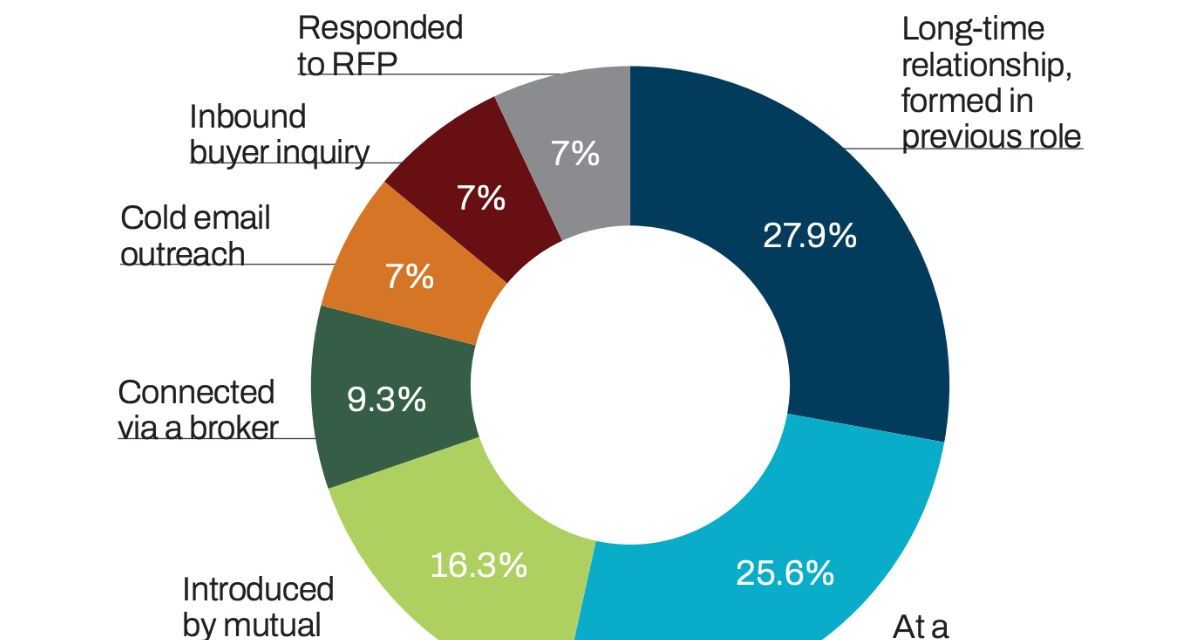
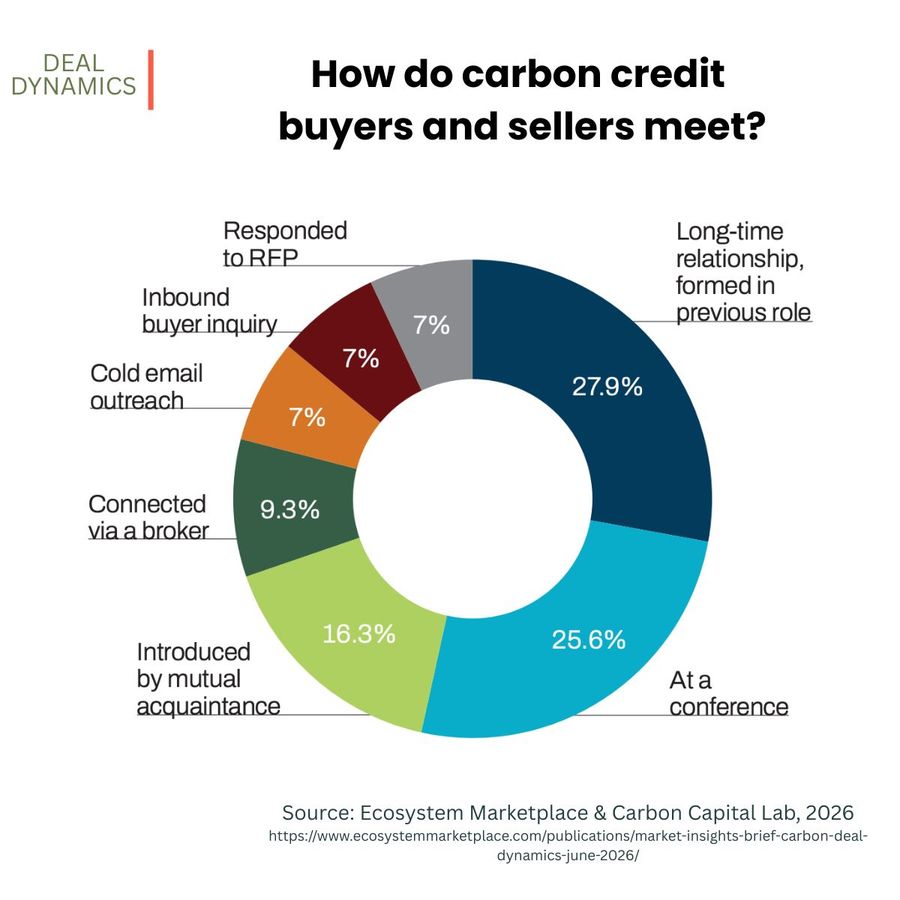
Almost 28% of reported transactions originated from a long-standing business relationship. A further 25.6% began at a conference, while 16.3% resulted from an introduction by a mutual acquaintance. Only 7% of the sales in the sample originated from cold email outreach.
For project owners, this means that producing a high-quality carbon credit is necessary, but not sufficient. Buyers also need to understand the project, trust the people behind it and feel confident that the project can deliver the promised climate impact.
Building these relationships requires time. Conferences, sector networks and introductions through trusted partners are therefore important sales channels, especially for smaller and newer project developers that do not yet have direct access to major carbon buyers.
Most sales discussions do not lead to a transaction
The report also provides a realistic picture of sales conversion. Approximately 68% of discussions ended during the initial exploratory phase, before formal due diligence had started. Only around one-third reached the due diligence stage, and approximately 7%, or one in fourteen discussions, resulted in a completed sale.
Price and buyer readiness were the two most frequently reported reasons for unsuccessful transactions. Many potential buyers are still exploring the market, learning how carbon credits work or developing an internal procurement strategy. Consequently, project developers often invest considerable time in conversations that ultimately do not result in a purchase.
Project owners should therefore expect to hear “no” regularly. A rejected proposal does not necessarily mean that the project or credit is of insufficient quality. The buyer may simply lack the budget, internal mandate, knowledge or readiness to proceed.
Issued credits sell faster than future credits
The timing of certification and issuance has a major effect on the sales process.
A spot transaction involving credits that have already been issued took an average of approximately five months to complete. An offtake or pre-purchase agreement for credits that will be delivered in the future took an average of fifteen months. Reported offtake timelines ranged from two to 36 months.
This difference is logical. When purchasing future credits, buyers must assess additional delivery, project and quality risks. They need to determine whether the project will become operational, whether it will generate the forecast volume and whether the credits will eventually meet the agreed requirements.
The findings strengthen the case for progressing to independent project validation as early as reasonably possible, followed by verification and credit issuance once carbon has demonstrably been removed and stored. Validation does not remove all project risk, but it gives buyers greater confidence that the project design and monitoring approach have been independently assessed.
For Oncra projects, this distinction can be summarised as follows:
Ex-post sale: the carbon has already been stored, independently verified and issued as carbon credits.
Ex-ante sale or offtake: a buyer commits to purchasing credits that are expected to be issued in the future.
Ex-ante finance can help projects expand, but project owners should account for the longer and more demanding sales process.
Small projects need aggregation and intermediaries
An individual farmer, biochar producer or biobased construction project may generate only a few hundred carbon credits. For a large corporate buyer, it is often inefficient to conduct separate due diligence, negotiations and contracting for every small project.
The report shows that intermediaries play a particularly important role in this segment. Forty percent of spot transactions conducted by intermediaries involved fewer than 1,000 carbon credits. None of the project developers in the survey reported directly selling a spot volume below 1,000 credits to an end-buyer. In addition, 90% of intermediary sales were made to end-buyers.
This does not mean that small projects must lose their individual identity. Each project can remain separately registered, traceable and visible while its credits are commercially offered as part of a larger portfolio.
Aggregation can reduce transaction costs for both buyers and project owners. A buyer can evaluate and contract a larger portfolio instead of repeating the same process for numerous individual projects. Project owners benefit from access to buyers that would otherwise consider their individual volumes too small.
What this means for Oncra projects
The report supports several elements of Oncra’s approach.
First, accessible certification is essential. Small-scale projects require a certification process that maintains environmental integrity without creating disproportionate costs.
Second, early validation and timely verification can make projects more credible and commercially attractive. Buyers are more likely to proceed when project documentation, monitoring and carbon storage claims have been independently assessed.
Third, aggregation is critical. By bringing credits from multiple small projects together in a transparent portfolio, relatively small volumes can become commercially relevant to larger buyers.
Finally, specialist brokers and other intermediaries remain important. They have established buyer relationships, market knowledge and the commercial capacity required to structure and execute transactions.
This is precisely where Oncra aims to contribute together with carbon market brokers, such as Scature: certifying high-integrity small-scale carbon removal projects, enabling transparent aggregation and helping those portfolios reach the market.
Clear separation between certification and sales
Oncra is and will remain an independent carbon certification organisation. Its role is to establish methodologies, assess projects and oversee the validation, verification, issuance and traceability of carbon credits.
Oncra does not act as the buyer or seller of the credits it certifies. Commercial sales are facilitated through cooperation with independent carbon brokers and other market intermediaries. This separation protects the independence and credibility of the certification process.
The broader message from Carbon Deal Dynamics is clear: successful carbon credit sales require more than generating verified climate impact. They require trusted relationships, realistic sales timelines, efficient due diligence and sufficient scale. For small carbon removal projects, collaboration and aggregation are therefore not optional extras. They are central to gaining effective access to the voluntary carbon market.
Source: Ecosystem Marketplace & Carbon Capital Lab, Carbon Deal Dynamics, June 2026.